
Flying Ointments in Witchcraft: History, Folklore & Traditional Use
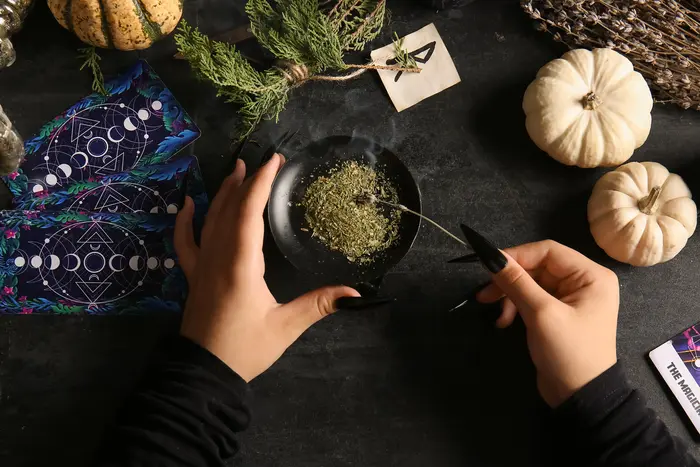
The image of a witch flying through the night on a broomstick is one of the most enduring in Western culture. What most people do not know is that the historical records behind this image are far more interesting, and much stranger, than the cartoon version.
Flying ointments are real. They appear in witch trial testimony, in the writings of early modern physicians and inquisitors, and in later occult literature. The broomstick was likely never the point. The ointment was there.
What the Historical Record Actually Says
The earliest detailed accounts of flying ointments come from the 15th and 16th centuries, though the practices they describe are almost certainly older. Inquisitors, physicians, and natural philosophers of the period wrote about ointments that witches supposedly rubbed onto their bodies or onto staffs and brooms before experiencing sensations of flight, travelling to sabbats, and encountering spirits.
Among the most cited early sources is the physician Andrés de Laguna, who in 1545 described an ointment confiscated during a witchcraft investigation in Metz. He claimed the ointment was made from soporific herbs and that a woman who had it applied to her slept deeply for 36 hours, reporting vivid experiences of travel and encounters during that time. Whether or not his account is accurate in every detail, it reflects a consistent pattern in the historical literature: ointments, altered states, and the sensation of having travelled somewhere.
Reginald Scot's The Discoverie of Witchcraft (1584) also includes a flying ointment recipe attributed to witches, listing ingredients including fat, smallage, wolfsbane, cinquefoil, and solanaceae plants. Johann Weyer's De Praestigiis Daemonum (1563) likewise discusses ointments and their effects, attributing them to natural pharmacological causes rather than demonic intervention, which was a notably rational position for the time.
What Was in Them?
The recipes that appear across historical sources share certain consistent ingredients. Animal fat, typically from pigs or other large animals, served as the base, allowing the active compounds to be absorbed through the skin. Into this fat went plant material from the Solanaceae family: henbane, belladonna, datura, and, sometimes, mandrake.
These plants all contain tropane alkaloids, primarily atropine, scopolamine, and hyoscyamine, that are absorbed transdermally. The pharmacological effects include altered perception, vivid hallucinations, the sensation of weightlessness or flight, and in higher doses, delirium and unconsciousness. Applied to thin-skinned areas of the body, the effects could be significant without the dangers of oral ingestion, though the margin between an effective and a lethal dose was still dangerously narrow.
Some recipes also include aconite (wolfsbane), which is toxic by a different mechanism and adds its own complications. Others list ingredients that appear to be symbolic rather than pharmacologically active, a reminder that the ointments existed at the intersection of practical herbalism and ritual intention, not purely as pharmaceutical preparations.
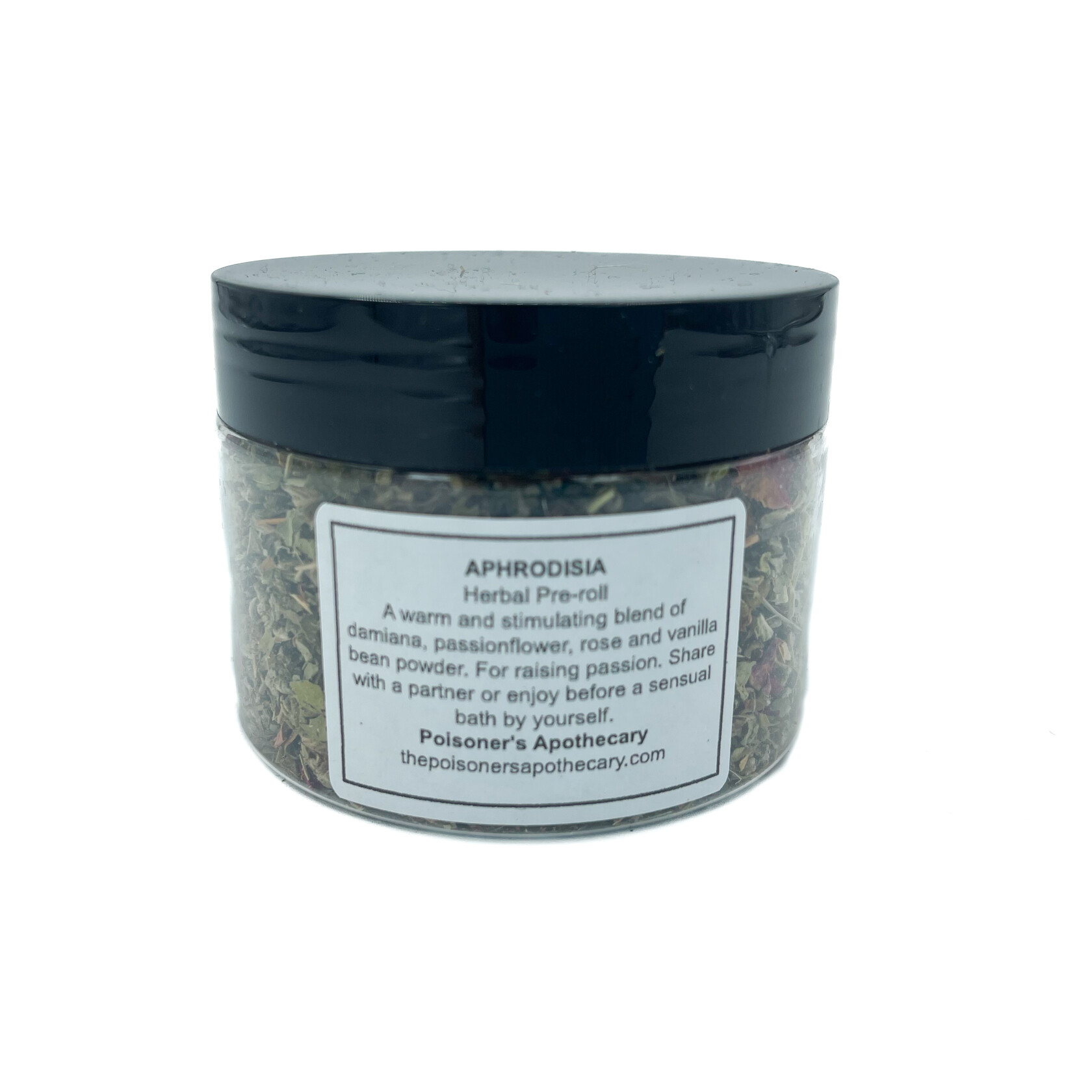
For the herbs and apothecary materials associated with this tradition, browse The Poisoner's Apothecary at Pentagram Salem.
The Folklore of Flight and the Sabbat
In the folk belief surrounding flying ointments, the destination mattered as much as the journey. Witches were said to travel to the sabbat, a gathering involving feasting, dancing, and meetings with spirits or the devil, depending on who was telling the story. Inquisitors interpreted these accounts through a theological lens. Folklorists and historians have since suggested that what they described, at least in part, were genuine altered-state experiences shaped by cultural expectation and belief.
The experience of flight itself, the sensation of leaving the body and travelling, closely maps onto what shamanic traditions across many cultures describe. The hedge witch or hedge rider in Northern European tradition was someone who could cross the boundary between ordinary reality and the spirit world, often through trance or altered states. Flying ointments may have been one method among several for achieving that crossing.
The broom or staff was not necessarily a vehicle. More likely, it was an applicator, a way of applying the ointment to sensitive areas of skin without direct hand contact, which would reduce the risk of accidental dosing through the hands.
How Contemporary Practitioners Approach Flying Ointments
There is genuine interest in flying ointments among contemporary practitioners of traditional witchcraft, hedge riding, and baneful herbalism. The approach has shifted considerably from the historical recipes, and responsibly so.
Most serious contemporary practitioners do not attempt to replicate historical ointments using toxic Solanaceae plants. The risks are too high and the margin for error too small. Instead, the field has developed in two directions:
Non-toxic ritual ointments that use herbs with milder effects, mugwort, wormwood, wild dagga, and similar plants associated with vivid dreaming, relaxation, and altered perception as bases for hedge riding and trance work. These are far safer and still draw on a genuine herbal tradition.
Traditionally formulated ointments from reputable makers prepared by herbalists with profound knowledge of baneful plants, using carefully controlled amounts of plant material intended for external ritual use. These are not DIY projects. They come from people who have spent years studying pharmacology and tradition and who take responsibility for what they produce.
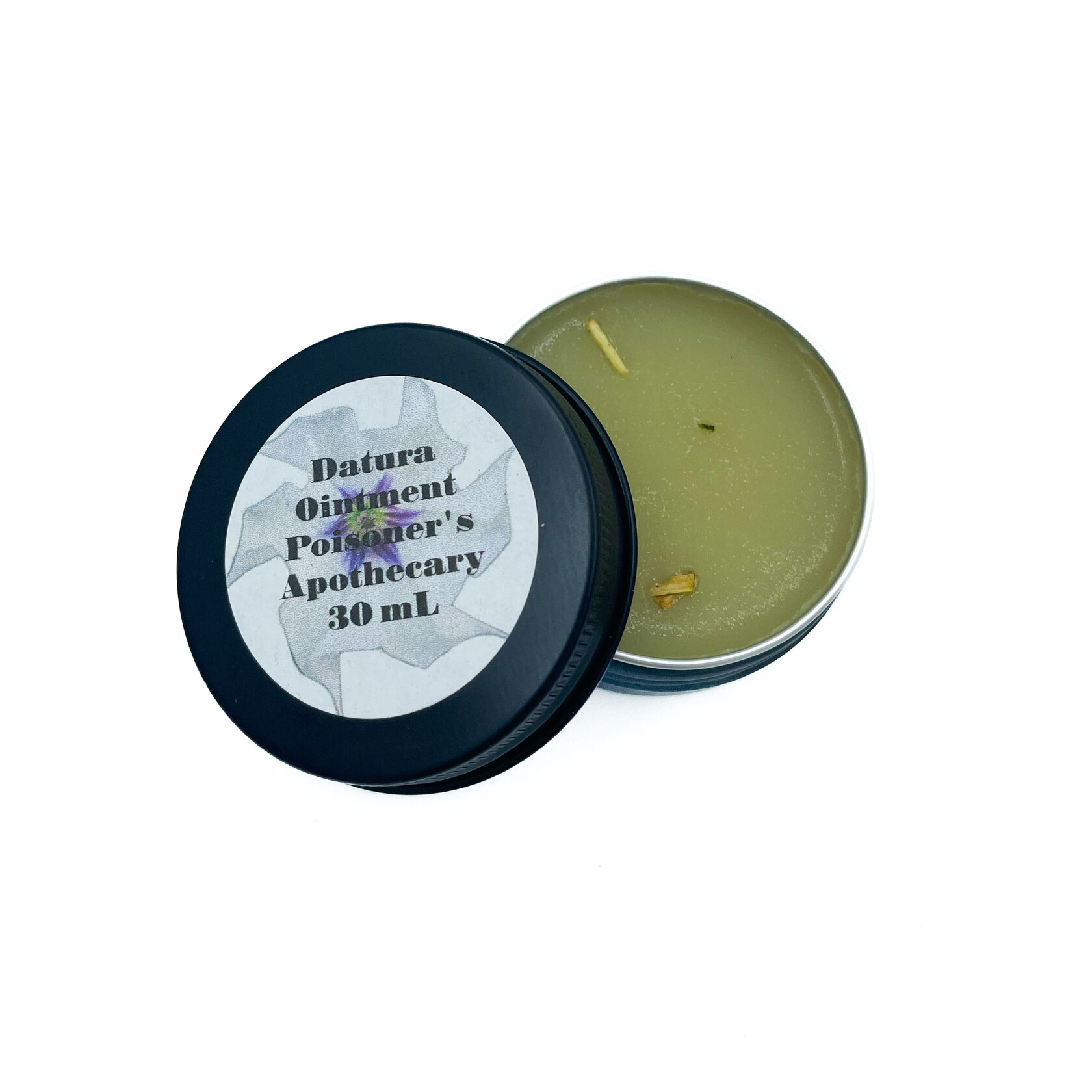
If you are looking for prepared ointments made with care and knowledge, our Salves & Ointments collection includes options suited to ritual use.
| A note on safety Never attempt to make a flying ointment from baneful plants without extensive herbalism knowledge and a full understanding of transdermal alkaloid absorption. The historical record includes accounts of deaths from these preparations alongside accounts of visionary experiences. The two outcomes are not always far apart. |
Why This Tradition Still Matters
Flying ointments sit at the intersection of herbalism, pharmacology, folk religion, and spirit work. They are one of the clearest examples of how practical knowledge and ritual intention were woven together in historical witchcraft; this was not purely symbolic practice, and it was not purely pharmacological experimentation. It was both at once.
For practitioners interested in traditional witchcraft, hedge riding, or the poison path, understanding the ointment tradition gives depth to the broader practice. It connects modern work to a documented lineage that stretches back at least five centuries in the written record and almost certainly much further in practice.
For books that cover flying ointments, baneful herbalism, and the history of witch ointment traditions in depth, browse our Herbalism Books collection. Authors like Harold Roth, Daniel Schulke, and Sarah Anne Lawless have written seriously and carefully about this material.
At Pentagram Shoppe in Salem
We carry apothecary supplies, prepared ointments, and books for practitioners who want to engage with this tradition thoughtfully. Our staff know the plants and practice; if you have questions about where to start or what is appropriate for your experience level, we are glad to help.
This craft is old work. It deserves to be approached with the same care the original practitioners brought to it.