

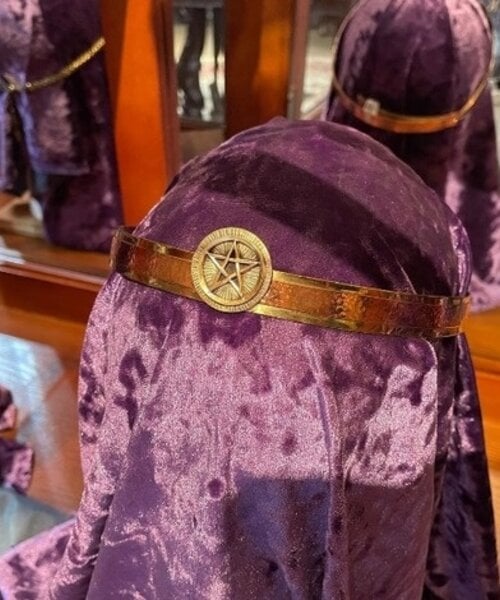
Setting Up a Samhain Altar: Tools, Colors & Sacred Symbols
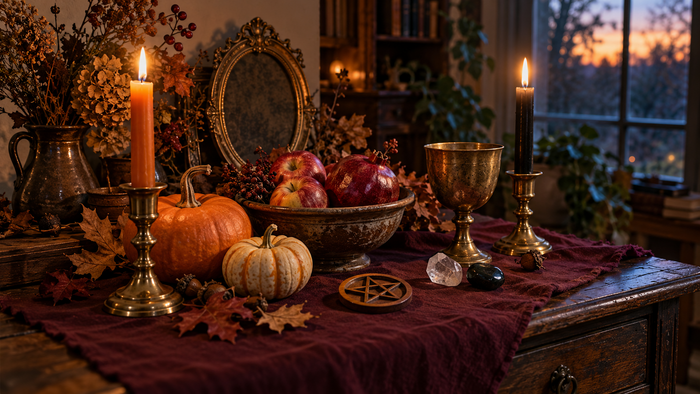
A Samhain altar is a dedicated space built to honor the dead, celebrate the last of the harvest, and mark the point in the Wheel of the Year when the veil between worlds is said to be at its thinnest. It's typically set up in the days leading into October 31st and left in place through early November.
If you already have a base altar set up, this post shows you how to adapt it for the season. If you're starting from scratch, our guide to building a witch altar covers the fundamentals first, and our piece on what a witch altar actually is is worth a read if you're new to the concept entirely.
Why Witches Build a Samhain Altar
Samhain marks the Celtic new year and the transition into the dark half of the calendar. Many witches treat it as a time to reflect on the year behind them, honor ancestors and loved ones who've passed, and give thanks for the final harvest before winter sets in. The themes are consistent across traditions: endings, transitions, remembrance, and the thinning boundary between the physical and spirit worlds.
Your Samhain altar doesn't need to look like anyone else's. Some witches build something elaborate with a full spread of seasonal decor. Others keep it to a single black candle and a photograph. Both honor the sabbat.
Where to Set It Up
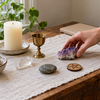
Any quiet, undisturbed surface works, the same guidance that applies to any altar. A shelf, a small table, or a spot near a hearth or fireplace if you have one are all traditional choices for Samhain specifically, since fire and warmth carry extra symbolism this time of year. If your regular altar already has a permanent home, you can simply adapt it for the season rather than building a second one from the ground up.
The Colors of Samhain
Samhain draws on the rich, deep palette of late autumn and the underworld:
Black represents death, the unknown, and the subconscious. Orange stands in for the harvest, fire, and the turning leaves. Red connects to life, blood, and transformation. Purple ties to mystery and spirit communication.
An altar cloth in one of these colors, or a mix of two or three, is an easy way to set the tone before adding anything else.
Samhain Candles
Candles carry particular weight at Samhain, representing the fire that guides spirits and marks the passage from light into dark. The most common choices:
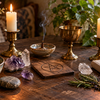
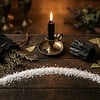
A black candle for the mysteries of the underworld and for banishing what no longer serves you. A white candle for spirit communication and for honoring the beloved dead. An orange candle for warmth, harvest, and connection to the living world.
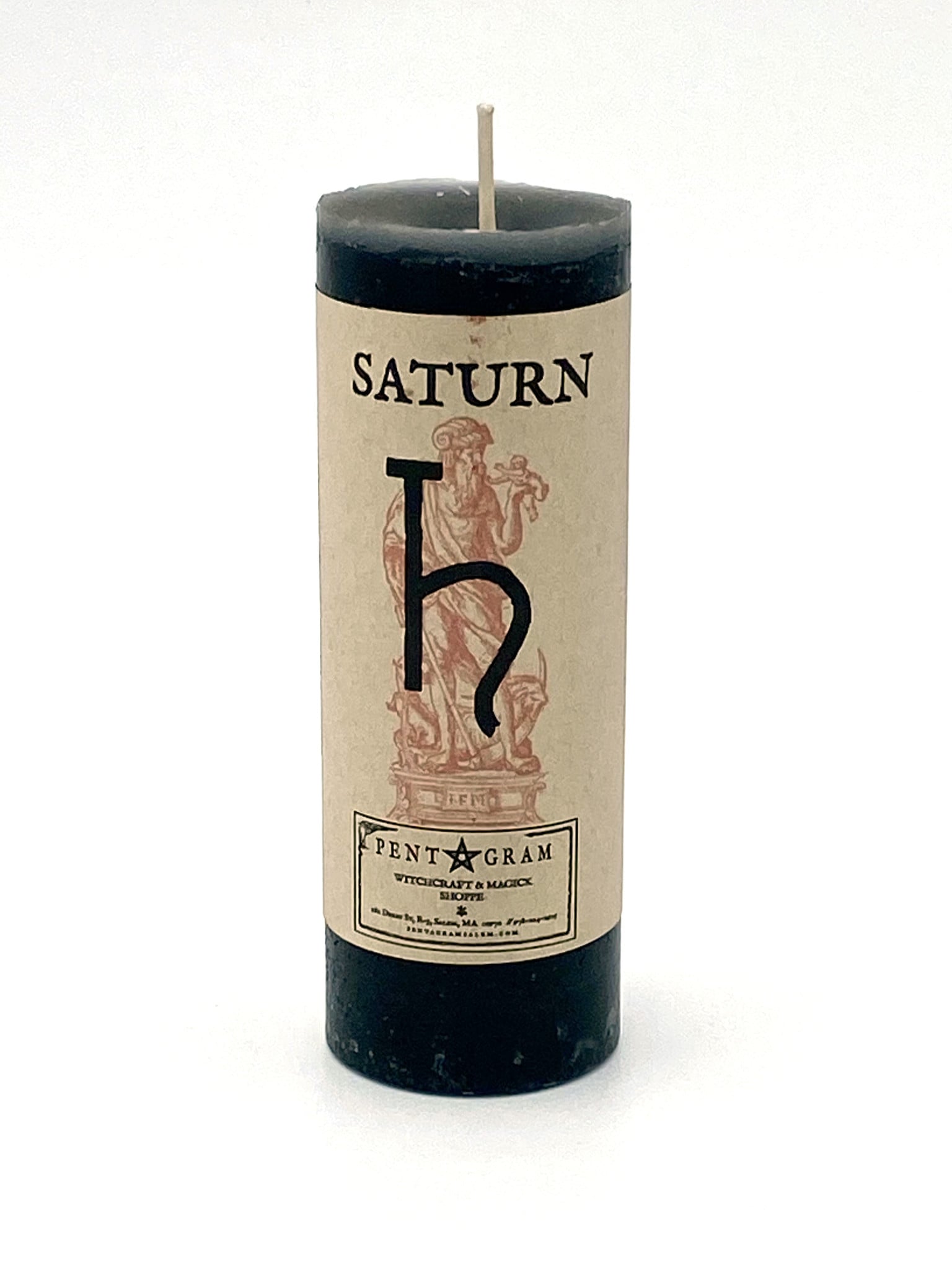
This is a different palette than the all-purpose candle correspondences most witches use year-round. If you want the full breakdown for spellwork beyond Samhain, our candle color meanings guide covers the general system this seasonal palette builds on.
Honoring Ancestors
Samhain is, at its core, a time to remember the dead. Photographs or mementos of loved ones who've passed are one of the most common additions to a Samhain altar, often alongside a small offering: a favorite food, a splash of wine or cider, or an object that belonged to them. Some witches set an extra place at the table during Samhain meals specifically for this reason.
Harvest & Seasonal Decor
Layer in the last of the season's harvest to ground the altar in the time of year:
Pumpkins, gourds, and apples for the final harvest. Autumn leaves, acorns, and pinecones for the turning season. Grains, wheat, or dried corn for abundance and the ongoing cycle of the year.
Anything gathered from your own yard or a local walk works just as well as anything purchased.
Sacred Symbols & Divination Tools
A few symbols show up on Samhain altars specifically because of the sabbat's connection to death, transformation, and the thinning veil:
Skulls, bones, or skeleton imagery, acknowledging death as part of life's cycle. A cauldron, symbolizing transformation and rebirth. A pentacle, for protection and balance between the elements. Since the veil is considered thin at Samhain, it's also a popular time for divination: tarot cards, runes, or a scrying mirror all have a natural place on the altar this time of year.
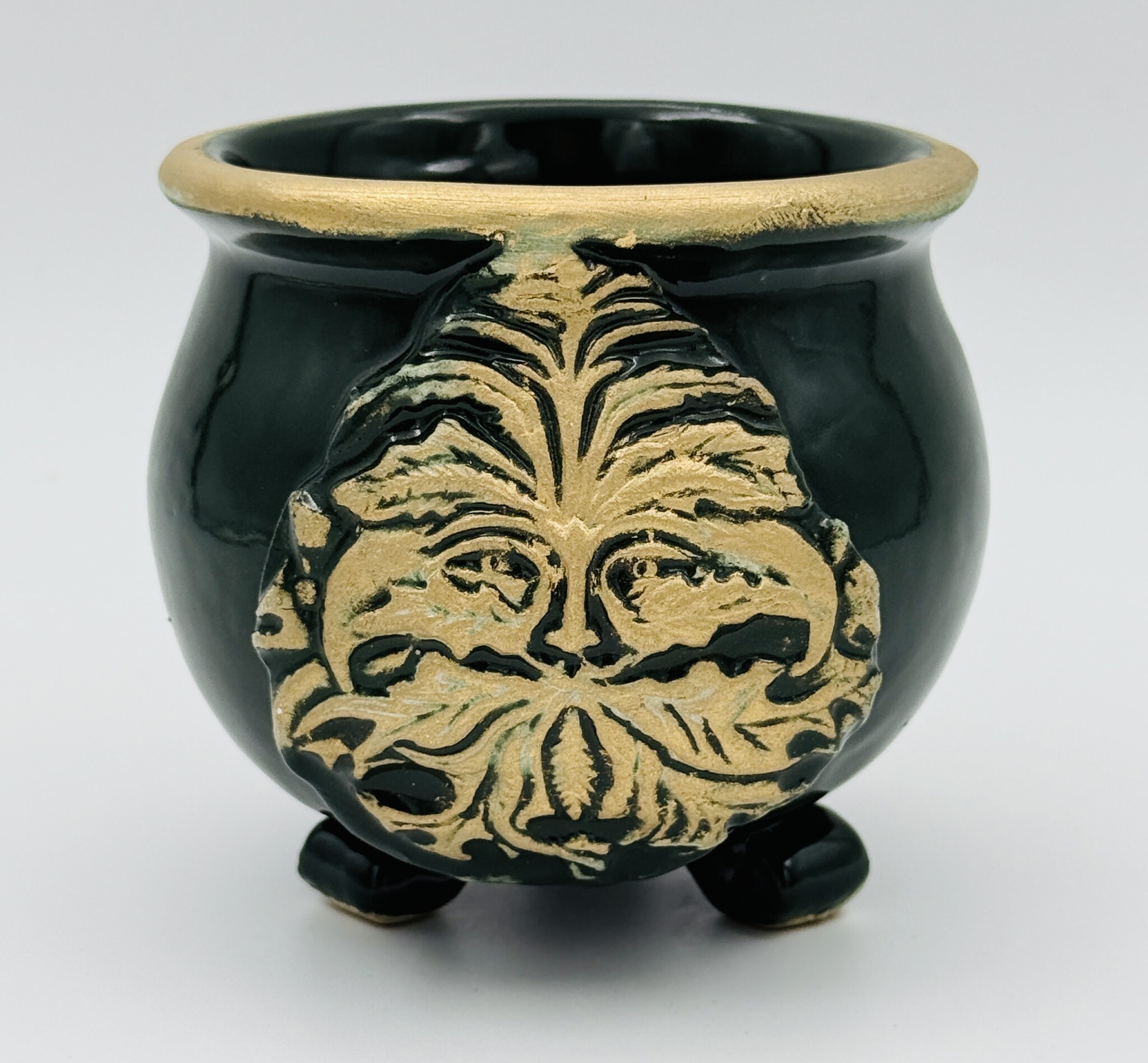
Our altar tools collection carries pentacles, cauldrons, and chalices sized for a Samhain setup if you're building yours from scratch.
Crystals & Herbs for the Season
Crystals: obsidian or black tourmaline for protection and grounding, amethyst for spirit communication, and carnelian for transformation.
Herbs and incense: mugwort for psychic work and connecting to the otherworld, rosemary for remembrance, and cinnamon or cloves for warmth and blessing.
Burning a pinch of any of these, or simply setting a small dish of them on the altar, rounds out the sensory side of the setup.
Frequently Asked Questions
What colors are used for a Samhain altar?
Black, orange, red, and purple are the most common, representing death, harvest, transformation, and spirit communication.
Do I need a separate altar for Samhain, or can I use my everyday one?
Either works. Many witches simply add seasonal colors, candles, and decor to their existing altar rather than building a second one.
What is the significance of Samhain?
It marks the Celtic new year and the shift into the darker half of the year, traditionally seen as a time when the veil between the physical and spirit worlds is thinnest.
Can I use Halloween decorations on a Samhain altar?
Many of the same symbols overlap (pumpkins, skulls, black cats), so yes, as long as the pieces feel meaningful rather than purely decorative.
Ready to build your Samhain setup? Browse the full altar tools collection for pentacles, cauldrons, chalices, and everything else on this list.